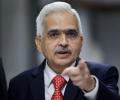
Reserve Bank Governor Shaktikanta Das on Wednesday said underlying economic activity in India continues to be strong, but external factors will cause some "dent" to the economy. Speaking at the BFSI Insight Summit 2022 organised by Business Standard, Das said the RBI tracks 70 fast moving indicators and most of them are in the "green box". It is the external sector, mired by a fear of recession or clear visibility about slowing growth in a large part of the world, where the challenges lie, he said, adding that the impact of external demand will "dent" the economy.
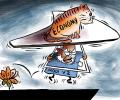
There is talk of a fresh approach to a new labour code as well as reforming land acquisition laws in such a way as to be politically.

As spending on infrastructure has three times the desired impact, the government's Rs 111 trillion National Infrastructure Pipeline should be accelerated: Assocham president, Vineet Aggarwal
This is being done keeping in mind the urgency of these transactions, and it would help the ongoing insolvency cases, including the 12 accounts referred by RBI to banks.
'When a company goes into insolvency, by definition it means that existing shareholders have been wiped out.'

The 21st meeting of FSDC comes against the backdrop of the economy hitting a six-year low growth rate of 5 per cent in the first quarter of 2019-20. Even some of the macroeconomic data for the second quarter does not portray an encouraging picture of the economy.

Maximum promoter holding to be eligible for reclassification to be raised from 10% to 15%; waiting time to be brought down to one month from three.
The gross bad debt of the Indian banking system as of March was at Rs 7.11 lakh crore

The financial year ending Saturday saw such big-ticket events that set the directional tone for the country's business journey.

'On the evening of the 17th, the RBI said the bank was put on moratorium.' 'Within an hour, the RBI said it would be merged with DBS.' 'How did DBS come to know within an hour that LVB was in trouble?' 'It means, what happened was match-fixing.'

The company denies any wrongdoing, but says that the negative media coverage has left it with no clients and mounting legal fees which has forced it to resort to closure.

'For a responsible person like him to utter such nonsense is shameful.' 'He is not fit to be a director on the RBI central board.'

While Waryam Singh was a non-executive director at HDIL, he is listed as one of the promoters of the company and had relations, including shareholding, with several other entities controlled by the Wadhawans, the HDIL founders.
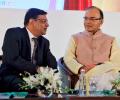
The Financial Stability and Development Council meeting on Tuesday started with an air of tension in the room. An official present described the participants' body language as "tetchy". However, once presentations and discussions begun, the mood considerably eased.

State-run lenders will take a lead in creation of the bad bank, but the sick asset resolution platform needs the support of private banks and other lenders to be successful, State Bank of India managing director Swaminathan J said on Thursday. If all lenders come on board, the National Asset Reconstruction Company (NARC) announced in the budget will be able to aggregate 100 per cent of a sick company's outstanding loans, which shall ultimately lead to better resolution of the asset quality stress for all. The government is yet to announce the specific contours of the NARC or the bad bank and has also only said that it is willing to provide some sovereign guarantee to help the platform.

Banks given 180-day time for NPA resolution, matter to be referred to Insolvency Board within 15 days.

Bankers said the SC verdict might prolong the resolution process and force lenders to bring back cases to the drawing board.
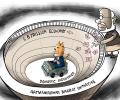
'The first year of the Modi government's second term has laid the roadmap for the future and we will embark on it with gusto,' promises Gopal Krishna Agrawal, the BJP's national spokesperson on economic affairs.
Experts consider Sebi's takeover code in its present form to be on a par with any foreign code governing public mergers and acquisitions.
P P Chaudhary the newly-appointed minister of state for corporate affairs, is monitoring and coordinating actions against shell companies.

Has the Modi government been more at odds with institutions than other governments? There is no doubt that there have been more run-ins. While the RBI and CBI cases have drawn attention, there have been others, less publicised, Subhomoy Bhattacharjee points out.
While the basic premise and spirit of the Code will remain the same, the commas and the full-stops in the draft report being prepared by a high-level committee will make interpretation of the law simpler

For his first Budget in July 2014, Jaitley inherited a fiscal deficit target of 4.1 per cent of GDP. From 4.1 per cent, the fiscal deficit came down to 3.4 per cent by 2018-19, with two slippages from the budgeted targets, in 2017-18 and 2018-19, the former due to introduction of the GST, says Arup Roychoudhury.

Noted banker Uday Kotak said the country's financial system is currently in a Darwinian mode as only the fittest lenders are able to survive. Kotak also said that historically, whenever there has been a problem with a private sector lender, it has been merged with a state-run bank.

The government would be ironing out issues related to the controversial 'bail-in' clause in the earlier Bill, explore hiking the deposit insurance cover of customers, and decide whether the resolution framework should apply to public sector banks.

Bad loans continue to originate mainly from state-owned banks, where the top management's responsibility is not linked to career prospects nor has legal consequences, says Debashis Basu.

The banking sector's credibility is on thin ice. Unless the government takes strict steps, things could get worse.

It would be a good idea to create independent oversight committees for each regulatory institution and indeed, even for their appellate bodies, says A K Bhattacharya.

To strengthen corporate governance practices and disclosure requirements, Sebi has notified new rules, including that top 1,000 listed firms will have to formulate a dividend distribution policy. The regulator has also put in place a framework in relation to applicability, constitution and role of the Risk Management Committee (RMC) and eased norms for re-classification of a promoter as a public shareholder, according to a notification dated May 5. In addition, the regulator has asked listed firms to make available audio and video recordings of analyst and investor meets on their websites as well as stock exchanges within 24 hours or before the next trading day and also notified rules regarding Business Responsibility and Sustainability Report (BSSR).
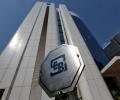
To make sure liquid schemes reflect the underlying portfolio risks, Sebi has said all debt papers with maturity of 30 days or more to be marked to market. Earlier, fund houses didn't have to do so for securities that had less than 60-day maturity.

Close to a million small shareholders have stake in nine NCLT-bound companies

China Development Bank takes Reliance Communications to NCLT over loan default
RBI says haste in easing norms for banks harmful to economy.
Finance Minister Arun Jaitley has said that the states were free to announce farm loan waivers if they had the fiscal space and that there would be no shortfall this year in divestment and non-tax revenues.

Among executives who have been approached are former president and CEO of IndiGo Aditya Ghosh, Wolfgang Prock Schauer, current president and Chief Operating Officer at IndiGo and Sanjay Kumar, Chief Strategy and Revenue Officer of IndiGo.

From promoters losing their firms to consumers realising there are no free lunches, 2019 was a year of getting real,says Shailesh Dobhal.

'The entire government-owned banking system (excluding SBI) is now in the red.' 'But worse is to come,' warns T N Ninan.
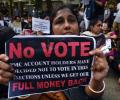
Only when the RBI inspection started on September 19 did they realise that their game was up and one of them had sent a letter to the central bank, leading to the RBI crackdown, report Anup Roy and Subrata Panda.

The biggest achievement of demonetisation is that it has brought about a social revolution against black money and corruption, says Sukumar Mukhopadhyay.
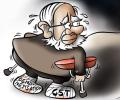
While GST and insolvency laws are among the major achievements of the Modi government, the list of failures include demonetisation, toxic banks, manufacturing hiccups and most prominently bizarre job creation figures. Mihir S Sharma takes a look at the four years of Modi government.
 © 2026 Rediff.com - Advertise with us - Disclaimer - Privacy Policy - Sitemap - Feedback - About us - Terms of use - Grievances